




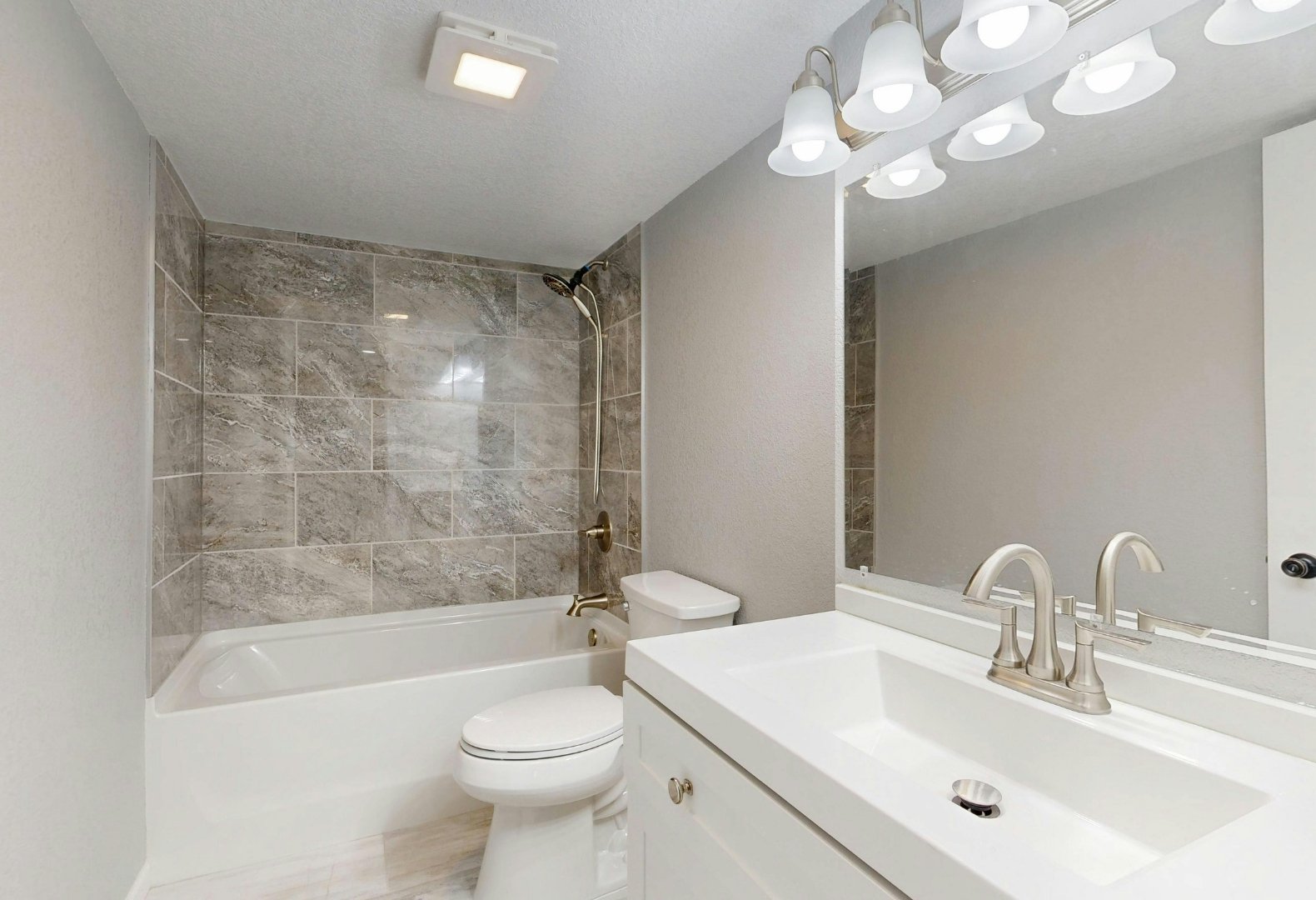
Small bathrooms often feel restrictive, but physical square footage is only part of the story. Thoughtful material choices, lighting design, and layout refinements can dramatically change how a space is perceived. For contractors guiding homeowners through remodel decisions, understanding visual perception is essential to successful bathroom expansion without demolition.
Rather than moving walls or relocating plumbing lines, professionals can reshape how the eye interprets scale, depth, and light. The result is a bathroom that feels larger, brighter, and more refined while staying within budget.
The Psychology Behind Perceived Space
Human perception relies heavily on light, contrast, and visual continuity. Dark colors absorb light and visually compress walls, while reflective surfaces bounce light and create openness. Busy patterns can fragment a room, but cohesive finishes draw the eye smoothly across the space.
When surfaces feel uninterrupted, rooms appear larger. That principle applies to flooring, wall panels, and even trim profiles. Contractors who explain these visual dynamics to homeowners position themselves as design partners, not just installers.
A successful bathroom expansion strategy often begins with simplifying visual lines rather than altering structural boundaries.
Light, Reflection, and Strategic Mirror Placement
Lighting plays a decisive role in perceived square footage. Layered lighting that includes ambient, task, and accent sources reduces shadows that make corners feel tight. Recessed fixtures and vertical sconces help elongate walls by distributing light evenly.
Mirrors amplify this effect. A large mirror spanning the vanity wall can visually double the depth of the room. Frameless mirrors extend sightlines, while mirrored medicine cabinets add storage without bulk.
Reflective surfaces also matter beyond mirrors. High-gloss finishes, polished metals, and light-colored wall systems help reflect illumination across the room. Even subtle sheen can make a noticeable difference in how expansive a bathroom feels.

Continuous Materials and Visual Flow
Interruptions in material transitions shrink perception. Small-format tile with heavy grout lines can break up the eye’s path. By contrast, large panels or slab-style materials create visual continuity.
This is where material selection becomes both aesthetic and practical. Contractors often face homeowners who want the look of traditional tile but hesitate at the cost. Acrylic wall systems solve this challenge effectively. These panels replicate the appearance of real tile at a fraction of the price, while eliminating grout lines that visually divide the wall.
Beyond cost savings, acrylic wall systems simplify installation and maintenance. For contractors seeking to balance budget expectations with high-end visuals, they provide a streamlined approach that supports cohesive design and faster project completion.
In luxury-focused remodels, homeowners frequently request natural stone. Real stone can increase project costs significantly and introduce maintenance concerns. Sentrel wall systems offer the appearance of premium stone surfaces without the financial burden. The panels provide rich veining and depth while remaining practical for everyday use.
Selecting large-scale wall systems is a core strategy in using surfaces and finishes to open up space. When walls read as unified planes rather than segmented surfaces, the room feels taller and wider.
Color Strategy That Expands Boundaries
Color manipulation is one of the simplest yet most powerful tools in bathroom expansion. Light neutral palettes such as soft whites, warm grays, and pale taupe's reflect light and reduce visual boundaries. Monochromatic schemes further enhance continuity.
Painting trim and walls in similar tones minimizes contrast lines that define edges. Extending the same flooring material from the main area into the shower zone also eliminates breaks that interrupt the visual field.
Even subtle vertical striping or elongated tile patterns can draw the eye upward, giving the illusion of higher ceilings. The goal is not necessarily to avoid contrast entirely, but to apply it strategically. A single focal wall can add dimension without overwhelming the room.
Streamlined Fixtures and Floating Elements
Bulky cabinetry and heavy vanities consume visual space. Floating vanities expose more floor area, allowing the eye to travel underneath the cabinet. This small shift dramatically increases perceived openness.
Wall-mounted faucets and concealed storage also reduce clutter. Recessed niches in shower walls eliminate protruding shelves, while integrated corner shelving maintains function without visual weight.
Refinishing existing fixtures can also contribute to a cleaner aesthetic. Replacing a bathtub may not be necessary if the surface can be restored.
For contractors, offering reglazing as part of their service lineup reduces material waste and supports budget-friendly remodels. Instead of removing and replacing fixtures, refinishing preserves the existing layout while elevating the visual appeal.

Glass and Transparency
Shower curtains create visual barriers that cut rooms in half. Clear glass enclosures maintain sightlines from wall to wall, preserving depth perception. Frameless designs are especially effective because they minimize metal framing that can segment the space.
Low-profile shower pans and linear drains further contribute to seamless transitions. When the shower floor blends with the main flooring through similar tones or materials, the bathroom feels unified.
Even small bathrooms benefit from eliminating opaque dividers whenever possible. Transparency encourages the eye to perceive the full dimensions of the room.
Decluttering Through Smart Storage
Visual clutter compresses space quickly. Open shelving with coordinated storage containers keeps essentials accessible while maintaining order. Built-in cabinetry that extends vertically maximizes storage without expanding the footprint.
Contractors can recommend recessed medicine cabinets, corner shelves, and integrated wall systems that conceal plumbing lines. Each concealed element reduces distraction and supports a cleaner visual field. Strategic storage is not just about organization. It directly influences how expansive a bathroom feels.
The Smart Solution for Successful Bathroom Expansion
Effective bathroom expansion is not always about moving walls. It is about guiding the eye, refining material choices, and maximizing light, continuity, and proportion. When contractors apply these principles thoughtfully, even compact bathrooms can feel open and inviting.
ISI Bathroom Systems supports contractors and professional reglazers with dependable materials, such as the Topkote Reglazing Start-Up kit, designed to simplify installation and elevate results. To explore additional tools and product options that enhance remodel projects, professionals can visit our shop and discover solutions tailored to modern renovation demands.


